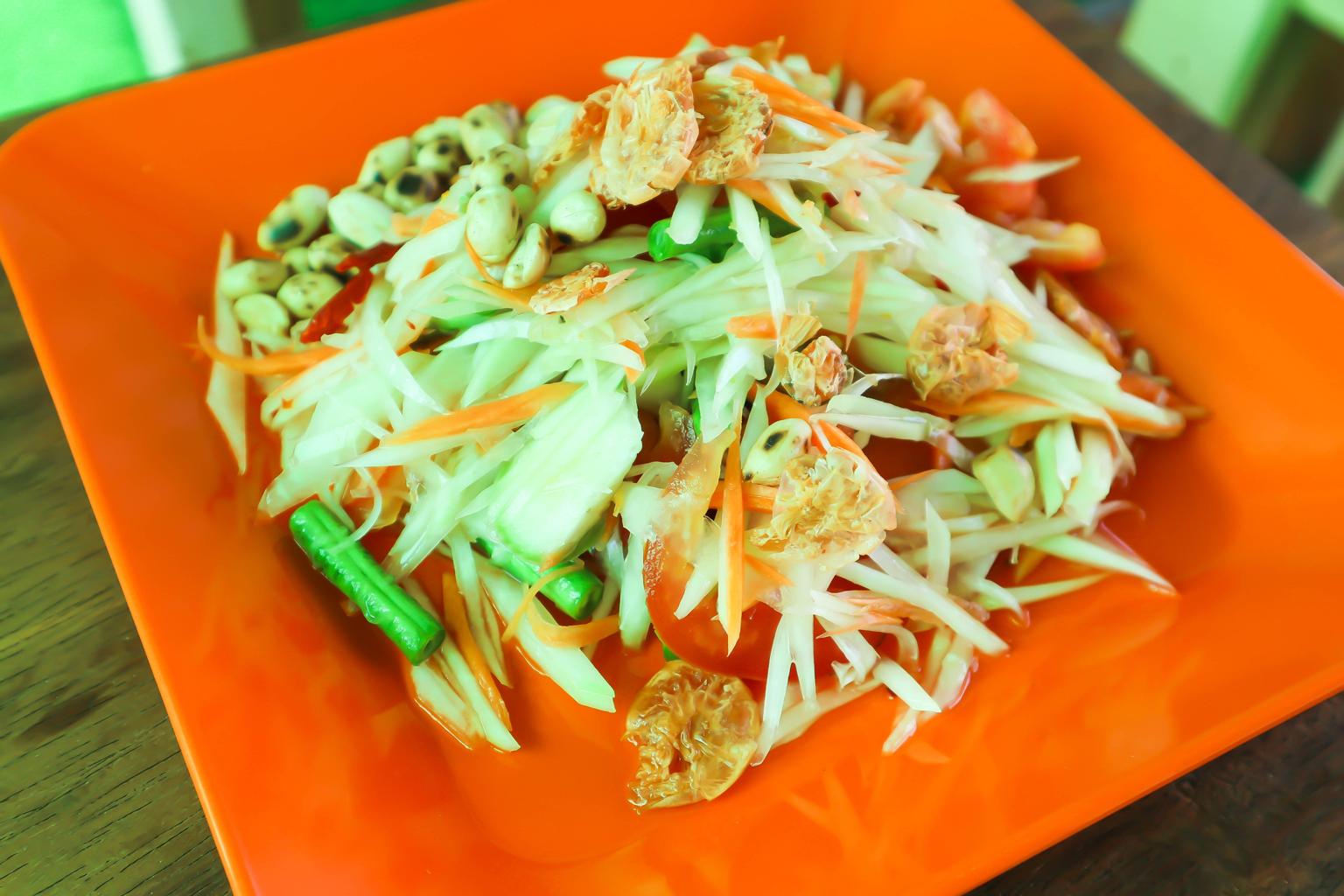
Walk down any bustling street in Thailand, and your senses will be immediately captivated by a symphony of sights, sounds, and aromas. Among these vibrant sensations, one sound is unmistakable: the rhythmic thud-thud-thud of a wooden pestle striking a clay mortar. This isn't just background noise; it's the signature sound of a culinary masterpiece in the making – the world-famous papaya salad, affectionately known as Som Tum.
Far from being a simple side dish, Thai green papaya salad is an explosion of exhilarating flavors, a testament to Thailand's unique culinary philosophy. It's refreshing, light, and surprisingly quick to prepare, yet delivers a complex interplay of sweet, salty, sour, and spicy notes that has captivated palates worldwide. But what is the refreshing secret behind this iconic dish? It all begins with the humble, yet versatile, unripe green papaya.
The Heart of Thai Cuisine: What is Papaya Salad (Som Tum)?
In its homeland of Isan, a northeastern region of Thailand, and indeed across the entire country, this vibrant dish is known as Som Tum. The name itself offers a clue to its essence: "som" translates to "sour," perfectly reflecting the dominant tangy profile, while "tum" beautifully mimics the distinct pounding sound produced during its preparation. This isn't merely a naming convention; it’s an active description of the culinary process that defines this category of salads.
Originating in the border regions of Isan and Laos, papaya salad has transcended its regional roots to become a national treasure and a global sensation. You'll find it everywhere – from bustling street food stalls and serene beachside eateries to high-end restaurants and, increasingly, in Thai and Lao restaurants across the globe. Its versatility is part of its charm; it can be enjoyed as a refreshing snack on its own, a piquant appetizer, or as a crucial accompaniment to rich grilled meats like marinated beef or succulent chicken, cutting through their richness with its bright acidity.
Som Tum is more than just a salad; it's a category of "pounded salads," a style of preparation integral to Lao and Isan cuisines. While the green papaya version, Som Tam Thai, is arguably the most famous, there are countless regional variations that showcase different ingredients and flavor balances, all united by that characteristic pounding technique and a foundation of bold, refreshing flavors.
A Symphony of Flavors: Deconstructing Som Tam Thai
While the umbrella term "Som Tum" covers many pounded salads, the version that has truly become synonymous with the name is Som Tam Thai, the Central Thai-style green papaya salad. It's the perfect embodiment of everything you could desire in a light, invigorating dish, delivering a full spectrum of tastes that dance on the tongue. Each component plays a vital role in crafting this exquisite experience:
- Crunchy Green Papaya: The undisputed star. Shredded unripe green papaya provides a refreshing, crisp texture and a mild, slightly bitter canvas for the other powerful flavors. It's essential that it's truly unripe, not just green-skinned.
- Fiery Chiles: Fresh bird's eye chilies are pounded into the mix, bringing a customizable heat that can range from a gentle warmth to an exhilarating blaze.
- Pungent Garlic: A few cloves of fresh garlic add a sharp, aromatic kick, deepening the salad's savory profile.
- Savory Dried Shrimp: These tiny, intensely flavored morsels contribute a concentrated umami and a subtle chewiness, adding depth that is characteristic of Thai cuisine.
- Roasted Peanuts: Crushed roasted peanuts provide a delightful nutty crunch and a grounding richness, balancing the acidity and spice.
- Long Beans & Tomatoes: Sliced long beans add another layer of crispness and a hint of green freshness, while cherry tomatoes burst with juicy sweetness and acidity, enhancing the overall vibrancy.
All these ingredients are brought together and tossed with a perfectly balanced dressing that is the soul of Som Tam Thai. This dressing is a masterful blend of:
- Fish Sauce: Providing the essential salty, umami backbone.
- Fresh Lime Juice: Delivering the quintessential "sour" (som) element, bright and zesty.
- Palm Sugar: Crucial for the sweet balance, counteracting the sourness and heat, creating a harmonious interplay of tastes.
This careful equilibrium of salty, sour, and sweet, alongside the customizable spicy kick, is what distinguishes Som Tam Thai. While other regional variations, particularly from Isan and Laos, often lean more heavily into savory and sour notes with ingredients like pla ra (fermented fish sauce), salted crabs, or pickled plums, the central Thai version is renowned for its generous and deliberate sweetness that perfectly complements its tang and heat. Regardless of the style, however, the "sour" (som) element remains a non-negotiable requirement, the very heart of any authentic papaya salad.
The Art of the Pound: Why a Mortar and Pestle are Non-Negotiable
The "tum" in Som Tum isn't just a sound; it's a technique, a philosophy, and a crucial step that sets these salads apart. While many Western salads involve gentle tossing, the Thai method of pounding ingredients in a mortar and pestle is fundamental to achieving the unique texture and flavor infusion of papaya salad. This isn't just about mixing; it's about transformation.
The goal is to lightly bruise and break down the ingredients, rather than pulverize them. This process coaxes out their internal juices, allowing them to mingle and meld, creating a more integrated and intense flavor profile. Crucially, it achieves this without sacrificing the delightful crunch that is so characteristic of the dish, especially the crispness of the green papaya and long beans.
For this specific task, the choice of tools is paramount. Forget the heavy granite mortar and pestle you might use for grinding spices or making a curry paste (prik gaeng). Those are designed for intense pulverization, which would turn your beautiful salad into a mushy paste. Instead, for Som Tum, you need a large, light mortar—traditionally made of clay or wood—paired with a sturdy wooden pestle. The increased volume capacity of these lighter mortars is ideal for handling the bulk of salad ingredients, allowing ample space for the rhythmic pounding motion.
The technique involves a gentle, controlled pounding and stirring motion. You bruise the garlic and chilies first to release their potent aromas, then gradually add other ingredients, lightly pressing and turning them to ensure every strip of papaya and every piece of tomato is infused with the vibrant dressing. It’s a dance of pressure and release, ensuring the integrity of the ingredients while extracting their maximum flavor. This particular pounding method is what gives papaya salad its incomparable texture and depth, making it impossible to replicate with just a mixing bowl and spoon. To truly master this technique, delve deeper into the nuances of preparation. For more detailed advice on this essential step, explore Mastering Som Tum: Sourcing Green Papaya & Pounding for Perfect Crunch.
Sourcing the Star: Unripe Green Papaya
The "green papaya" in green papaya salad is not just a descriptive adjective; it's a critical ingredient that defines the dish. The star of the show is, quite literally, an unripe papaya. Its flesh is firm, pale green-white, and has a neutral, almost cucumber-like flavor, providing the perfect crisp vehicle for the bold dressing. This distinction from ripe, sweet, orange papaya is absolutely vital.
Sourcing true green papaya, while sometimes a small quest, is increasingly easy, especially if you know where to look. Your best bet is always an Asian grocery store, particularly those specializing in Southeast Asian produce. These markets consistently stock the correct variety, often fresh from local or international growers.
However, a crucial word of caution for those venturing into more mainstream supermarkets: Do not be fooled by a green-skinned papaya at stores like Whole Foods or your local conventional grocery store, no matter how firm it feels. Despite their outward appearance, these papayas are often much further along in the ripening process. You might cut into them expecting that crisp, pale flesh, only to find it's already turning orange and sweet. This will fundamentally alter the taste and texture of your papaya salad, turning it into something entirely different—and not in a good way for Som Tum.
When selecting green papaya, look for one that is uniformly green, very firm to the touch, and heavy for its size. If you can, ask a store assistant if it’s specifically for Som Tum. Once you have your perfect green papaya, preparing it involves peeling the tough outer skin, splitting it lengthwise, scooping out the seeds (though sometimes a few immature seeds remain), and then shredding the flesh into thin, long strips. This can be done with a specialized papaya shredder, a mandoline with a julienne blade, or even a sturdy vegetable peeler followed by careful knife work. Understanding the subtle balance of flavors and ingredients in this iconic dish is key to appreciating its genius. For a deeper dive into the components that make this salad sing, be sure to read Som Tum Explained: Unpacking the Sour-Sweet Balance of Thai Papaya Salad.
Beyond the Plate: Cultural Significance and Enjoyment
While the taste of papaya salad is undeniably captivating, its true essence extends beyond just its ingredients. It's a dish deeply woven into the fabric of Thai culture and daily life. It’s a quintessential fast-food item, available at nearly every street corner, reflecting the vibrancy and immediacy of Thai street food culture. It's not uncommon to see office workers grabbing a quick som tum for lunch or families sharing a large platter for dinner.
The experience of eating Som Tum is often communal and highly sensory. The initial visual appeal of its bright colors, the aroma of lime and fish sauce, the sound of the pestle (even if you're not making it yourself), and then the explosion of flavors and textures in your mouth—it’s an all-encompassing delight. Traditionally, papaya salad is served with sticky rice (khao niao), which helps to temper the spice and soak up the delicious dressing. It’s also frequently paired with various grilled meats, creating a complete and satisfying meal that perfectly balances richness with refreshing zing.
For home cooks, one of the beauties of Som Tum is its customizable nature. You can adjust the level of spice by adding more or fewer chilies, tweak the sweetness with palm sugar, or increase the tang with extra lime juice. This flexibility allows everyone to find their perfect balance, making it a truly personal culinary adventure. Whether you prefer a fiery kick or a milder, sweeter rendition, the core identity of this refreshing and flavorful salad remains.
From the rhythmic pounding of the pestle to the zesty explosion of flavors, green papaya salad is more than just a dish; it's an experience. It encapsulates the very heart of Thai cuisine, balancing a complex array of tastes into a harmoniously refreshing and utterly addictive creation. The secret lies in its perfectly unripe green papaya, the precise technique of the "tum," and the exquisite balance of sweet, sour, salty, and spicy. Whether you're savoring it from a bustling street stall or recreating its magic in your own kitchen, Som Tum promises a culinary journey that's both exhilarating and deeply satisfying, solidifying its place as a truly world-famous Thai treasure.
