Som Tum Explained: Unpacking the Sour-Sweet Balance of Thai Papaya Salad
Walk down any bustling street in Thailand, and your senses are immediately captivated. The aroma of grilling meats mingles with the sweet scent of jasmine, but above all, there's an unmistakable rhythm: the insistent thud-thud-thud of a wooden pestle meeting a clay mortar. This isn't just background noise; it's the culinary heartbeat of a nation, signaling the creation of one of the world's most beloved and iconic dishes: papaya salad, known authentically as Som Tum.
Som Tum is more than just a salad; it's an explosion of flavors and textures that dance on the palate – a perfect harmony of sour, sweet, salty, and spicy. Globally recognized for its refreshing bite and vibrant character, this humble dish has transcended its origins to become a fast-food favorite, a go-to snack, and an integral part of any authentic Thai meal. But what makes this green papaya concoction so irresistibly delicious, and how does it achieve its signature sour-sweet balance?
The Anatomy of Som Tum: A Name That Tells a Story
To truly appreciate Som Tum, one must understand its name. In the northeastern Thai region of Isan (and indeed, throughout Thailand), the dish is known as Som Tum. The term is wonderfully descriptive: "Som" translates directly to "sour," highlighting the essential, puckering zest that forms the dish's backbone. "Tum," on the other hand, refers to the distinctive pounding sound made by the large pestle as it crushes the ingredients in a mortar. This simple etymology immediately tells you two crucial things about this world-famous green papaya salad: it's sour, and it's prepared with a unique, rhythmic pounding technique.
Originating from the Isan region of Thailand and closely linked to Lao cuisine, Som Tum is deeply embedded in the cultural fabric of Southeast Asia. While it began as a regional staple, its irresistible allure quickly propelled it across Thailand and eventually, the globe. Today, whether you're in Bangkok, London, or New York, finding a delicious rendition of this refreshing, light, and quick-to-prepare papaya salad is easier than ever, often served as a standalone snack or as a perfect accompaniment to marinated grilled meats like beef or chicken.
A Symphony of Flavors: Unpacking the Sour-Sweet-Spicy Balance
The beauty of Som Tum lies in its dynamic flavor profile, an intricate balance that tantalizes every taste bud. While "sour" is the non-negotiable requirement, the dish's precise blend of other flavors can vary significantly depending on regional styles. The most globally recognized iteration is Som Tam Thai, the Central Thai-style green papaya salad, which strikes an exquisite equilibrium:
- Sour: Primarily from freshly squeezed lime juice, this is the "som" that defines the dish.
- Sweet: A generous amount of palm sugar provides a mellow, caramel-like sweetness that beautifully complements the sourness.
- Salty/Umami: High-quality fish sauce is indispensable, contributing a savory depth and umami richness that ties all the flavors together. Dried shrimp often add another layer of oceanic savoriness.
- Spicy: Fresh chilies, typically bird's eye chilies, deliver the heat. The spice level is highly customizable, ranging from mildly warm to fiercely fiery, depending on the number of chilies pounded into the mix.
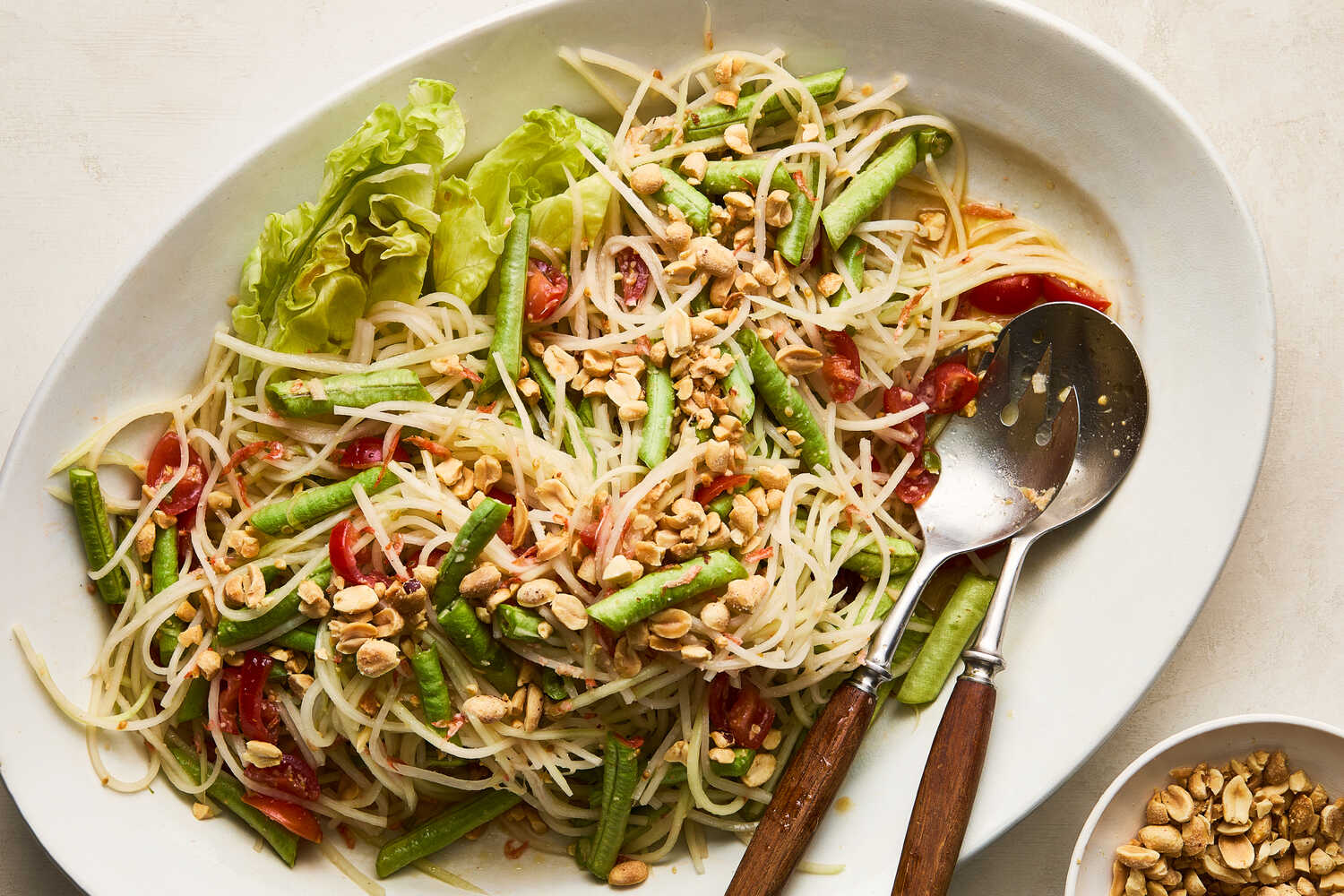
Beyond the dressing, the crunchy strips of unripe green papaya are tossed with an array of fresh ingredients: pungent garlic, crisp long beans, and juicy tomatoes. Roasted peanuts provide a delightful textural contrast and nutty flavor, completing this vibrant culinary masterpiece. It’s an undeniable explosion of flavors that leaves you craving more.
It's important to note the fascinating regional nuances. While Som Tam Thai embraces a balanced sweet-sour profile, its Isan and Lao counterparts often lean more heavily into savory and intensely sour notes. These versions frequently incorporate ingredients like pla ra (a pungent fermented fish sauce known as padaek in Lao), salted crabs, and pickled plums, creating a more challenging yet deeply rewarding flavor experience for the adventurous palate. These variations underscore the versatility and cultural depth of the humble papaya salad.
The Art of the Mortar and Pestle: The Heartbeat of Som Tum
The preparation of Som Tum is as integral to its identity as its ingredients. The rhythmic pounding you hear from street vendors is not just for show; it’s a precise culinary technique that defines the texture and flavor of the salad. For mastering Som Tum, sourcing green papaya and pounding for perfect crunch are critical steps.
The key tool is a specific type of mortar and pestle – typically a large wooden or clay mortar paired with a sturdy wooden pestle. Unlike the heavy granite mortars used for pulverizing fibrous aromatics into curry pastes, the aim here is a lighter touch. The goal is to lightly bruise and break down the ingredients just enough to release their precious juices and mingle their flavors, without completely mushing them. This delicate balance ensures that the green papaya, long beans, and other components retain their delightful crunchy texture, which is a hallmark of an authentic papaya salad.
The increased volume capacity of these larger mortars is ideal for mixing salads, allowing the ingredients to be tossed and pounded efficiently. This meticulous, almost ritualistic pounding process is what creates the unique marriage of flavors and textures that makes Som Tum so utterly addictive.
Sourcing the Star: Finding the Perfect Green Papaya
At the heart of any great papaya salad is its star ingredient: the green papaya. This isn't just any papaya; it's an unripe, firm, and entirely green fruit that provides the essential crisp texture and neutral flavor canvas needed for the vibrant dressing to shine.
While seemingly exotic, true green papaya is surprisingly accessible in many parts of the world, especially in the US. Your best bet for sourcing them is at Asian grocery stores, particularly those specializing in Southeast Asian produce. When selecting, look for papayas that are:
- Completely Green: There should be no hint of yellow or orange on the skin.
- Firm to the Touch: It should feel as hard as a potato, with no give when gently squeezed.
- Unblemished: Avoid papayas with soft spots or signs of ripening.
A crucial tip for home cooks: Be wary of "green-skinned" papayas found in conventional supermarkets like Whole Foods. While they may appear green on the outside, they are often much further along in the ripening process than a true green papaya. Cutting into them will likely reveal an orange interior and a sweet, rather than neutral, flavor profile – rendering them unsuitable for Som Tum. For the authentic crispness and ability to absorb the dressing's bold flavors, seek out genuinely unripe green papaya.
Crafting Your Own Som Tum: Practical Tips for Home Enthusiasts
Embarking on your own Som Tum journey at home is a rewarding experience. Here are a few practical tips to guide you:
- Invest in the Right Tools: A proper clay or wooden mortar and pestle will elevate your homemade papaya salad significantly.
- Shredding Technique: For the characteristic long, thin strips of papaya, you can use a julienne peeler, a mandoline with a julienne blade, or even a specialized papaya shredder. Some traditionalists use a heavy knife to score the papaya and then shave off thin strips.
- Adjust to Taste: The beauty of Som Tum is its adaptability. Feel free to adjust the amount of chilies for spice, lime for sourness, palm sugar for sweetness, and fish sauce for saltiness to suit your personal preference. Don't be afraid to taste and adjust as you go!
- Freshness is Key: Use the freshest ingredients possible. This is particularly true for the lime juice, which makes a huge difference in the overall brightness of the salad.
- Serve Immediately: Som Tum is best enjoyed fresh, as the papaya can soften over time if left dressed.
Conclusion
Som Tum, the vibrant Thai papaya salad, is a testament to the power of simple ingredients combined with expert technique to create something truly extraordinary. From the rhythmic pounding of the pestle to the explosive sour-sweet-spicy balance on your tongue, it’s a dish that engages all the senses and embodies the lively spirit of Thai cuisine. Whether you're enjoying it on the bustling streets of Bangkok or meticulously crafting it in your home kitchen, Som Tum offers a refreshing, exhilarating, and deeply satisfying culinary experience that continues to captivate food lovers worldwide.
