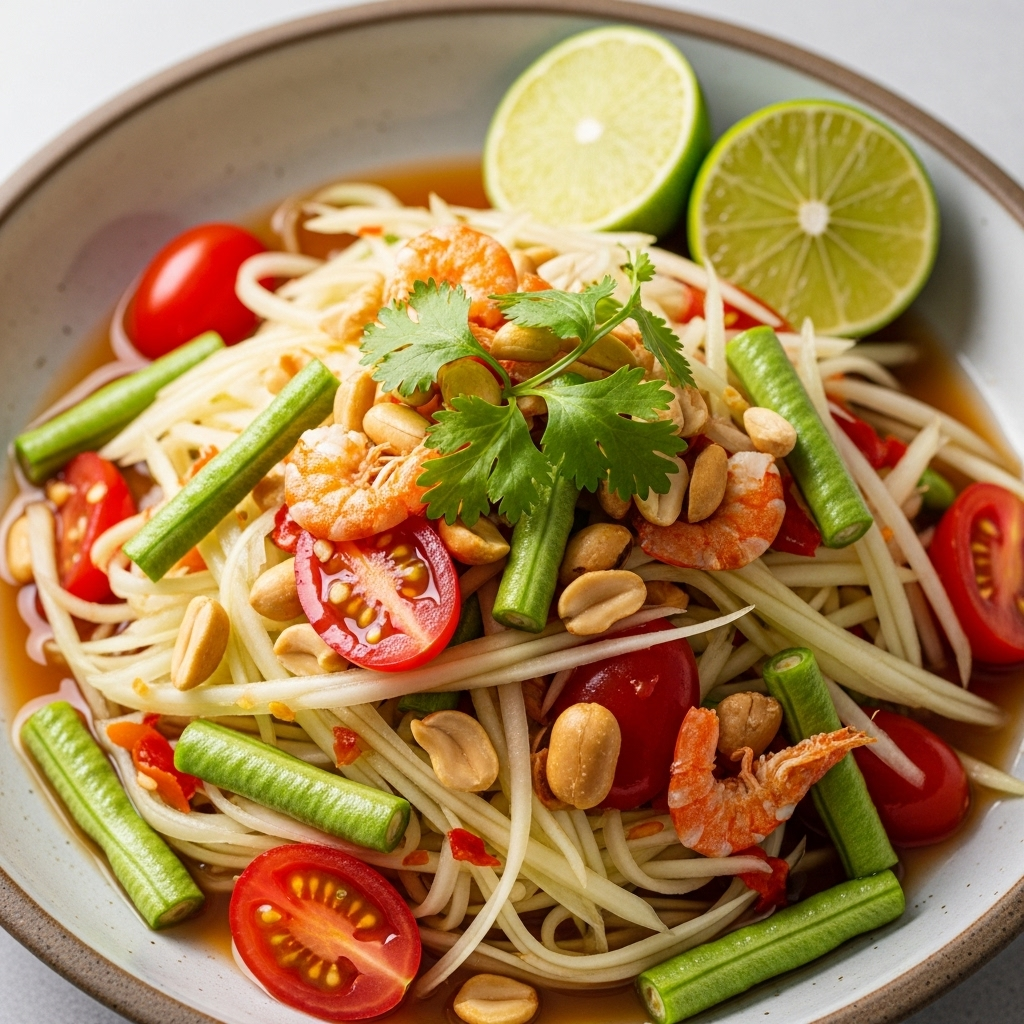
The Rhythmic Pulse of Thai Cuisine: Understanding the "Tum" in Som Tum
Walk down a bustling street in Thailand, and you'll inevitably be drawn in by a captivating symphony of sounds and aromas. Among the sizzling woks and fragrant curries, one sound stands out: the rhythmic *thud-thud-thud* of a pestle striking a mortar. This isn't just noise; it's the heartbeat of one of Thailand's most beloved dishes,
som tum – better known globally as
green papaya salad.
The name itself tells a story: "Som" translates to "sour," a quintessential flavor note in Thai cuisine, while "Tum" refers to the act of pounding or crushing ingredients. Far from being a mere mixing process, the "tum" technique is fundamental to unlocking the vibrant flavors and achieving the signature crunchy texture that makes this dish so irresistible. It's an art form passed down through generations, ensuring every component releases its essential oils and juices while maintaining its structural integrity.
At its core, som tum is a refreshing, light, and explosively flavorful salad. It perfectly balances sweet, sour, salty, and spicy notes, creating a culinary experience that is both invigorating and deeply satisfying. While it can be enjoyed as a snack on its own, it frequently accompanies marinated grilled meats like chicken or beef, and is a staple fast-food item found throughout Thailand and in Thai and Lao restaurants worldwide. But to truly master this iconic dish, you need to understand two critical elements: sourcing the perfect green papaya and employing the correct pounding technique.
The Green Papaya Quest: Sourcing the Unripe Star for Unmatched Crunch
The undisputed star of any authentic
papaya salad is, naturally, the green papaya. This isn't just an unripe version of the sweet, orange fruit you might enjoy for breakfast; it's a distinct ingredient with its own unique characteristics. Green papaya offers a firm, crisp texture and a subtly vegetal, almost neutral flavor profile, making it the perfect canvas for the bold dressing it will absorb. Without this specific ingredient, you simply can’t achieve the authentic taste and, crucially, the desired crunch.
Sourcing genuine green papaya in Western countries has become increasingly easier. Your best bet is to visit an Asian grocery store, particularly one specializing in Southeast Asian ingredients. These markets consistently stock the correct type of papaya. When selecting your green papaya, look for the following:
- Firmness: It should be rock-hard to the touch, with absolutely no give. This indicates its unripeness and guarantees maximum crunch.
- Color: The skin should be a uniform, vibrant green, devoid of any yellow or orange patches, which signal ripening.
- Appearance: Opt for one without blemishes or soft spots.
A Crucial Warning: While some mainstream supermarkets might offer green-skinned papayas, exercise extreme caution. Often, these are simply papayas that have been picked prematurely but are still further along in their ripening process than a true "green" papaya. You might find them turning orange and sweet once cut open, rendering them unsuitable for som tum. Stick to the specialized Asian markets to avoid disappointment.
Once sourced, preparing your green papaya is straightforward. First, peel the tough green skin. Then, the real magic begins: shredding. The traditional method involves striking the papaya with a knife to create deep incisions, then thinly slicing the resulting strips. However, a julienne peeler, a mandoline with a julienne blade, or a specialized papaya shredder can achieve the desired long, thin, crunchy strands much more efficiently. The goal is to create uniformly thin strips that will absorb the dressing while retaining their delightful crispness. This fibrous crunch is a cornerstone of the som tum experience.
A Symphony in a Mortar: Crafting the Iconic Papaya Salad Dressing
With the green papaya shredded and ready, attention turns to the heart of the salad's flavor: the dressing and its preparation. This is where the "tum" truly comes into play. Unlike tossing a Western salad, the ingredients for som tum are vigorously, yet carefully, pounded together in a specific type of mortar and pestle.
The ideal tool for som tum is a traditional **clay or wooden mortar** paired with a **wooden pestle**. This differs significantly from the heavy granite mortars used for grinding curry pastes. The lighter materials allow for a gentler, more controlled pounding action. The larger volume capacity of these mortars is also perfectly suited for mixing and bruising the salad ingredients.
The goal of the pounding is not to pulverize the ingredients into a fine paste, but rather to lightly bruise and break them down. This action releases their aromatic oils and juices, allowing them to meld together into a cohesive, explosive flavor profile, all while ensuring the ingredients retain their delightful texture and crunch.
The standard components for a central Thai-style Som Tam Thai, which offers a beautifully balanced sweet-sour profile, typically include:
- Fresh Chiles: Often bird's eye chilies, pounded to release their heat.
- Garlic: Lightly bruised to infuse its pungent aroma.
- Roasted Peanuts: Crushed to add texture and a nutty depth.
- Dried Shrimp: Providing a savory, umami punch.
- Long Beans: Cut into short pieces and lightly bruised for a fresh snap.
- Cherry Tomatoes: Halved and gently crushed to release their juices.
These ingredients are pounded first, creating a flavorful base. Then, the liquid dressing components are added:
- Fish Sauce: For essential saltiness and umami depth.
- Lime Juice: Providing the "som" (sour) element.
- Palm Sugar: Crucial for balancing the sourness with a nuanced sweetness.
Finally, the shredded green papaya is added to the mortar, and everything is gently pounded and mixed. The aim is to ensure all ingredients are coated and infused with the dressing, while the papaya and long beans maintain their signature crispness. The slight bruising helps the papaya absorb the dressing more effectively, intensifying the flavor in every crunchy bite.
While the central Thai style leans into a sweet-sour balance, it's worth noting that regional variations exist. In Isan (northeastern Thailand) and Laos, som tum often features more savory and intensely sour notes, incorporating ingredients like *pla ra* (fermented fish sauce, known as padaek in Lao), salted crabs, or pickled plums. Sourness, however, is a universal requirement across all styles.
Beyond the Pounding: Tips for Perfect Texture and Flavor
Achieving the perfect som tum goes beyond simply having the right ingredients and tools; it's about technique and understanding the interplay of textures and tastes.
Tips for the Pounding Process:
- Gentle Agitation: Don't smash everything with brute force. Use a circular motion with the pestle and a gentle pounding action. The goal is to bruise, not to obliterate.
- Scrape and Turn: Regularly scrape the sides of the mortar with a spoon and turn the ingredients over to ensure even distribution and pounding.
- Taste as You Go: The beauty of som tum is its customizable nature. Taste the dressing as you pound and adjust the fish sauce, lime juice, and palm sugar to your preference. Some like it spicier, some sweeter, some more sour.
Achieving Maximum Crunch:
- Ice Bath: After shredding, submerging your green papaya in an ice bath for 15-30 minutes can significantly enhance its crispness. Drain thoroughly before adding to the mortar.
- Freshness is Key: Use the freshest possible green papaya and long beans. Older vegetables lose their snap.
- Serve Immediately: Som tum is best enjoyed right after preparation. The longer it sits, the more the dressing will soften the papaya, diminishing its crunch.
Once your masterpiece is complete, plate it beautifully and serve it with traditional accompaniments. Sticky rice is a must, providing a comforting contrast to the salad's vibrant flavors. Grilled chicken (Gai Yang) or beef (Neua Yang) are classic pairings, offering a protein-rich counterpoint. The refreshing, spicy, and crunchy notes of som tum cut through the richness of the grilled meats, creating a harmonious and unforgettable meal.
Mastering som tum is a journey of sensory discovery. From the hunt for the perfect green papaya to the rhythmic art of pounding, each step contributes to the magic of this world-famous
papaya salad. By understanding the core principles of sourcing and technique, you’re not just making a dish; you’re bringing a piece of Thailand's culinary soul into your kitchen. So grab your mortar, find your green papaya, and get ready to pound your way to perfect crunch and an explosion of flavor!